

Latihan Terbelah, Indonesia Kejar Mousinho Kerja保留了Bigl
Stadion PTIK Jakarta became the headquarters of Garuda on Sunday morning (4/10), where the Indonesian national team wrapped up its final training session ahead of the biggest match of the project: the...
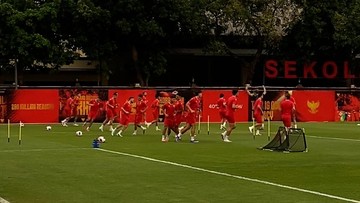
Stadion PTIK Jakarta became the headquarters of Garuda on Sunday morning (4/10), where the Indonesian national team wrapped up its final training session ahead of the biggest match of the project: the FIFA ASEAN Cup 2026 final against Thailand. The schedule was deliberately split into two sessions, tactical work in the morning and a lighter regeneration program in the afternoon, to keep the squad's legs fresh for the decisive night.
The main talking point in Jakarta is not the lineup, but the separation. Half of the squad did shuttle runs and finishing drills while the rest worked on set pieces and defensive transitions, a classic pre-final blueprint aimed at avoiding injury fatigue. In a knockout match, one single hamstring problem can erase weeks of preparation, and nobody in the camp wants to watch the final from the treatment table.
Why the Split Session Matters
Split training is rarely a sign of disunity. More often, it's a sign of a coaching staff that knows exactly how much load each body can handle. The morning block focused on shape without the ball — pressing triggers, defensive compactness, and the closing speed needed to lock down Thailand's counter-attacks. The afternoon block was almost recreational: recovery runs, stretching, and short passing circuits.
Against Thailand, those details are worth more than they look. The War Elephants arrive as the most decorated team in the region's history, with five AFF titles on their cabinet and a 4-2 aggregate victory over Indonesia in the 2020 final. That memory is still sharp: possession dropped, the tempo collapsed after the break, and two goals conceded late turned a controlled match into a painful exit.
"Our focus is not only on scoring. We must control the game without the ball, because Thailand will punish every clearance that isn't a decision. The final is about discipline first, and the second decision."
The Numbers Indonesia Must Protect
For the final, three indicators stand out as the tactical key. First, ball possession: Indonesia needs to hold above 50 percent to prevent Thailand from building their attacking sequences from the back. Second, shots on target — a minimum of five clear chances is the benchmark against a rival whose goalkeeper has repeatedly delivered tournament-level saves. Third, the defensive line: zero goals conceded in regulation, extended if necessary to extra time and penalties.
Thailand's danger lies in transition. When their wingers get a running start, the space behind the full-backs opens instantly, and Indonesia's back line has to decide in a split second whether to hold the line or step out. The starting XI selection will likely hinge on exactly that: whether the coaching staff wants an extra midfielder to protect the shape, or an extra attacker to stretch the Thai block.
Card discipline will also be under the microscope. A yellow card in the semifinals means missing the final, and given the physical duels expected in the center circle, refereeing tolerance will be thin. One mistimed challenge, and the captain will be watching from the stands.
Mental Preparation: 90 Minutes of Pressure
On the pitch, the picture is bright. Off it, the pressure is enormous. A final is decided in the head as much as in the feet, and the squad's veteran core — players who have experienced both triumph and heartbreak in this competition — has been asked to set the tone in the final training session.
The afternoon session closed with set-piece routines, the area where knockout matches are most often won. Corners, free kicks, and rehearsed routines for the second ball: coaches know that a single headed goal can rewrite an entire match plan. Thailand's aerial strength is well documented, and Indonesia's response must be equally organized.
Historically, Indonesia's best finishes in this tournament came when the team was compact and stubborn rather than open and brave. The 2020 final showed what happens when the plan dissolves after minute 70. This time, the emphasis is on structure, control, and patience — a 90-minute chess match in which the first goal may not arrive until the hour mark.
Final preparations are now complete at PTIK. The squad leaves Jakarta with a clear message for Thailand: the trophy will be contested, and every duel will be fought. The rest belongs to the pitch.
What's Your Reaction?
 Like
0
Like
0
 Dislike
0
Dislike
0
 Love
0
Love
0
 Funny
0
Funny
0
 Wow
0
Wow
0
 Sad
0
Sad
0
 Angry
0
Angry
0

Data Journalist Hukum. Visualisasi data kejahatan dan analisis tren kriminal.






Comments (0)